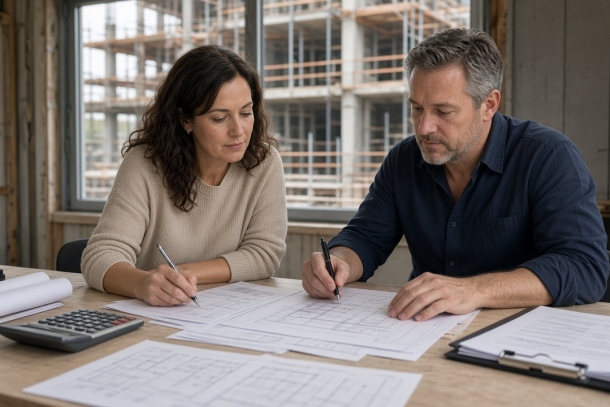
On site, some client decisions can seem frustrating: a sudden push to finish early, a request to cut costs or a delayed approval. But behind most decisions are business pressures. Project managers who understand them make better recommendations and build stronger client relationships. Understanding business pressures in construction changes how you see those decisions.
Business pressures in construction: cash flow
For clients and contractors, cash flow is often the biggest pressure. Clients may be relying on finance drawdowns, sales or other income. Contractors need regular payments to pay staff, subcontractors and suppliers. Delays in payment ripple through the whole project.
Finance costs
When a project is funded with borrowed money, every month of delay can add interest costs. That’s why clients often push hard for programme certainty.
Opening dates and revenue
For retail, hospitality and commercial clients, the opening date often drives everything. A late opening can mean lost trading, rent paid without income and missed seasonal peaks.
Budget approvals
Clients often work within approved budgets set by owners, boards or lenders. Going over budget may require new approvals, which can delay decisions.
Risk and liability
Clients and contractors both carry risk: cost overruns, defects, safety incidents and disputes. Many decisions are driven by trying to limit risk exposure.
Competition and margins
Contractors often price competitively on tight margins. That affects how they handle variations, resources and programme.
What this means for project managers
- Ask what’s driving a client’s decision, not just what they want
- Present options with clear cost, time and risk implications
- Raise issues early so clients have time to respond
- Understand contract and payment terms
- Communicate in business terms, not only technical ones
Seeing the project through the client’s eyes
On site, it’s natural to focus on the build: the trades, the materials and the programme. But for the client, the project is usually one part of a much bigger picture. A shop fit-out is about trading. An office move is about keeping a business running. A new home is often the biggest financial decision a family will make. When you understand that picture, many decisions that seemed unreasonable start to make sense.
Reading the signs
Clients don’t always explain the pressure they’re under. But there are often signs:
- A sudden focus on the completion date
- Requests to delay certain items or split the work into phases
- Slower payments or approvals than earlier in the project
- New people from the client’s side joining meetings
- More questions about cost than about design
When you notice these, have an honest conversation. Asking “is something changing on your side that we should plan around?” can save a lot of frustration.
Business pressures in construction for contractors
It’s not only clients who are under pressure. Contractors and subcontractors face their own business pressures: keeping teams busy, managing cash flow, paying suppliers on time and pricing competitively. A subcontractor who suddenly pulls people off site may be dealing with a cash flow problem or a clash with another project. Understanding this helps PMs respond with practical solutions rather than only complaints.
Turning pressure into better decisions
Pressure leads to poor decisions when it’s hidden or rushed. It leads to better decisions when it’s on the table. As a PM, you can help by:
- Laying out the options clearly, with honest cost and time implications
- Showing which choices are reversible and which aren’t
- Separating what’s urgent from what’s important
- Recording decisions and the reasons for them
Protecting quality and safety under pressure
Business pressure should never become a reason to cut corners on safety or structural quality. When pressure builds, PMs need to be the steady voice that keeps the non-negotiables in place, while finding flexibility everywhere else.
The South African context
In South Africa, many of these pressures are familiar: interest rates, power interruptions, municipal delays, security costs and the challenge of planning around an uncertain economy. Clients in Gauteng often have to balance all of these at once. A PM who understands that and plans for it is far more useful than one who only reports problems after they happen.
A simple habit that helps
At the start of a project, ask the client a few direct questions: What happens if the project is late? What happens if it costs more than planned? Who else needs to approve decisions on your side? Are there dates that can’t move? Write the answers down and refer back to them. When pressure builds later, you’ll already understand what matters most to the client, and you’ll be able to recommend options that protect it. That one conversation often prevents weeks of frustration further down the line, and it shows the client you’re thinking about their business, not only the building.
Business pressure is normal
None of this means clients or contractors are being difficult. Business pressure is a normal part of every project. The PM’s job is to understand it, plan around it and keep the conversation honest, so that decisions are made with clear information rather than in a panic late in the job.
Final thought
Construction decisions are business decisions. Project managers who understand the pressures behind them can guide clients better, avoid conflict and protect the project’s success.
Related reading: Why Good Project Managers Think Like Business Owners, Construction Cycles: What Every PM Should Know and Economic Pressure and Construction Project Risk.
Planning a build, renovation or fit-out in Gauteng? Call or WhatsApp me on 082 44 00 421, email unclemerwe@gmail.com or visit my homepage to see how I work.