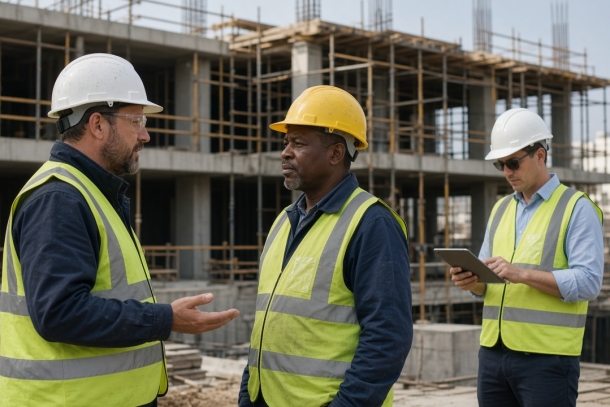
The move from site manager to project manager is one of the biggest steps in a construction career. On paper, it looks like a natural progression. You already know how buildings go together, how to run a site and how to get the best out of the trades. In reality, the transition asks you to change how you think, where you spend your time and what you measure yourself by.
I’ve seen people make this step smoothly and others struggle with it for years. In this article I want to share what changes, what you have to let go of, and what you need to build to become a real project leader, not just a site manager with a new title.
Even after I started my own business, I was always on site. Always. It was very difficult for me to let go of the physical work and just do the project managing.
I wanted to show people how to do it, what to do and how it should look. That isn’t all bad. It’s how you train up people who don’t know yet. But even today, letting go is still a massive challenge for me.
Part of it is that I take my projects very personally. If it’s my project, I want it right.
At some point you have to learn to trust the people you’ve taught. They know what they’re doing. That’s why you trained them.
For me, that’s the real shift from site manager to project manager. It isn’t a new title. It’s learning to step back.
What changes from site manager to project manager
As a site manager, your world is the site. You are responsible for safety, quality, daily progress, labour, deliveries and the subcontractors in front of you. Success is visible: the slab is cast, the walls are up, the snag list is shorter than yesterday.
As a project manager, your world gets bigger and less tangible. You are responsible for the whole project: the client relationship, the budget, the programme, the consultants, contracts, procurement, risk and reporting. Much of your work happens in meetings, emails and documents. Success is less visible day to day. It shows up in decisions that prevent problems weeks or months later.
That shift can feel uncomfortable. Many new PMs miss the clear, physical sense of progress that site work gives them.
Letting go of doing everything yourself
The hardest habit to break is doing the work yourself. Good site managers are hands-on problem solvers. When something goes wrong, their instinct is to go and fix it. As a PM, if you keep doing that, you’ll be stuck in the detail while the bigger picture drifts.
The transition means trusting your site team to run the site, and holding them accountable for it, while you focus on the things only the project manager can do. That doesn’t mean you stop visiting site or lose touch with the work. It means you go to site to understand, check and support, not to take over.
What helped me most was a simple rule: let them make the mistake. I still guide, and I’m there when they need me, but I let my team handle it and come to me with the question. That’s how they learn, and it’s how I got my time back for the work only a project manager can do.
From managing tasks to managing outcomes
Site managers manage tasks: today’s pour, this week’s deliveries, the next inspection. Project managers manage outcomes: will this project finish on time, within budget, at the right quality, with a client who would hire us again?
That means thinking further ahead. What decisions does the client need to make in the next month? Which long-lead items need to be ordered now? Where is the budget under pressure? Which risks could stop the project? The programme becomes a planning tool, not just a record of what happened.
Learning to work with the client
Many site managers have limited direct contact with the client. As a project manager, the client relationship becomes central. You become the person who explains progress, presents problems, recommends options and manages expectations.
This takes a different set of skills. Clients want honesty, clarity and confidence. They don’t want jargon or surprises. Learning to deliver bad news early, with a plan, is one of the most important skills a new PM can develop. It builds trust far faster than trying to hide problems until they can be fixed.
Getting comfortable with the commercial side
Site managers often see cost from a distance. Project managers live with it. Variations, payment certificates, cash flow, claims and the final account all become part of your job. You need to understand the contract, know what the client has agreed to pay for and recognise when something is a change in scope.
If commercial work is new to you, invest time in learning it. Work closely with the quantity surveyor, read the contracts and ask questions. Commercial awareness is what lets you protect the client’s interests and keep the project healthy.
Leading people who don’t report to you
As a site manager, you often have clear authority over the people on site. As a project manager, much of your work involves people you don’t directly control: architects, engineers, the QS, the client’s team and sometimes several contractors. Getting results means influencing, coordinating and holding people to agreements, without relying on rank.
This is where leadership really starts. Clear meeting structures, written actions, consistent follow-up and fair treatment of everyone involved go a long way.
Using your site experience as a strength
The good news is that site experience is a huge advantage. You know what is realistic. You can spot an unbuildable detail on a drawing, challenge an over-optimistic programme and earn the respect of site teams because you’ve done their job. Many of the best project managers I know came from site.
The goal isn’t to leave your site knowledge behind. It’s to add the project-level skills on top of it, so your practical understanding informs better decisions across the whole project.
If I had to pick one lesson from my site years that still shapes how I run my day, it’s this: it’s not your house. It’s not your site.
The client has the final say. It’s their house, their project. My job is to guide, support, help and put in my two cents to move it forward.
If they don’t want to go my way, I accept it. I’ve advised to the best of my ability. I don’t get aggressive and I don’t fight back. I respect their space and I respect them as a client.
You’ve done everything to advise. Now let them make the call, even if it means letting them make the mistake.
And if it does go wrong, they can come back to you with more trust than before, knowing that guy was actually right.
Practical tips for making the move
- Find a mentor. Ask an experienced PM if you can learn from how they run their projects.
- Get involved early. Ask to join design and procurement meetings before you formally step up.
- Learn the paperwork. Understand reports, programmes, contracts and payment processes.
- Delegate on purpose. Give your site team clear responsibility and support them in it.
- Communicate in writing. Confirm decisions and actions after meetings.
- Be patient with yourself. The transition takes time. Expect a learning curve.
Final thought
Moving from site manager to project manager is not just a promotion. It’s a change in role, perspective and responsibility. The people who make the transition well are those who let go of doing everything themselves, learn to manage outcomes instead of tasks, and use their site experience to make better project-level decisions. Done well, it’s one of the most rewarding steps in a construction career.
Related reading: Career Moves That Matter in Construction and Why Technical Skill Alone Won’t Make You a Senior PM.
Planning a build, renovation or fit-out in Gauteng? Call or WhatsApp me on 082 44 00 421, email unclemerwe@gmail.com or visit my homepage to see how I work.