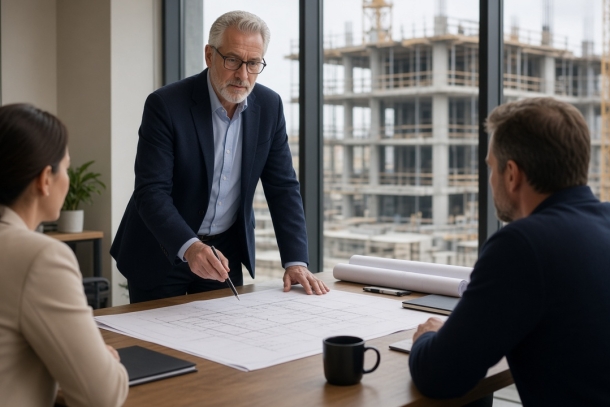
Technical knowledge is essential in construction. You need to understand how buildings go together, how trades interact and what can go wrong. But as project managers grow, the work that adds the most value shifts. The best PMs are becoming more strategic, not just more technical. Strategic project managers are the ones clients value most.
Technical skill gets you in the door
Early in a career, technical problem-solving is how you prove yourself: sorting out details, fixing site issues and keeping work moving. That foundation, built through hands-on experience, never stops being useful.
Why clients value strategic project managers most
Clients don’t only want problems solved. They want a project that meets their business goals. That means understanding:
- Why the project exists and what success looks like for the client
- How cost, time and quality trade off against each other
- Which risks matter most and how to manage them early
- How decisions today affect operations, maintenance and future plans
Thinking ahead, not just reacting
Strategic PMs spend less time firefighting because they spot issues earlier. They plan procurement, approvals and sequencing ahead, and they raise risks before they become problems.
Seeing the commercial picture
Understanding cash flow, variations, contracts and margins helps PMs make decisions that protect the client and the project. Commercial awareness is a big part of strategic thinking.
Delegating technical detail
As PMs grow, they rely on site managers, consultants and specialists for detailed technical work. Their role becomes coordinating, checking and making the right calls with the information available.
Communicating at the right level
Strategic PMs adjust how they communicate. Site teams need practical detail. Clients and executives need clear summaries, options and recommendations.
What strategic thinking looks like on a real project
Strategic thinking isn’t about sitting in an office drawing diagrams. On a construction project, it looks like practical habits:
- Asking the client what success looks like before the first drawing is finalised
- Thinking about how the building will be used and maintained, not just how it will be built
- Spotting early which decisions will be expensive to change later
- Planning approvals and long-lead items before they become urgent
- Reporting risks with options, not just problems
Strategic project managers still care deeply about the technical detail. They just make sure the detail serves the bigger goal.
Asking better questions
One of the simplest ways to become more strategic is to change the questions you ask. Instead of only asking “how do we build this?”, ask:
- Why does the client need this project now?
- What happens to their business if it’s late or over budget?
- Which part of the scope matters most to them, and which is negotiable?
- What will they be dealing with five years after handover?
The answers change how you prioritise, what you recommend and how you communicate.
Making trade-offs visible
Every project involves trade-offs between cost, time and quality. A technical PM often makes those trade-offs quietly on site. A strategic PM makes them visible to the client, explains the options and lets the client decide with clear information. That builds trust, and it protects the PM when decisions are questioned later.
How to build strategic skills
Strategic thinking grows with experience, but you can speed it up:
- Sit in on client and budget meetings, not only site meetings
- Learn to read a contract and understand payment and variation clauses
- Review finished projects honestly: what went well, what didn’t and why
- Ask senior people how they made a big decision, and listen to the reasoning
- Read about your clients’ industries, so you understand what drives them
Strategic, not distant
Becoming more strategic doesn’t mean leaving the site behind. The best strategic PMs still walk the site, still talk to the trades and still notice when something isn’t right. Their strategic thinking is grounded in what’s really happening on the ground. That’s what makes it useful.
A warning about titles
Being strategic isn’t something that comes with a job title. Plenty of people with senior titles still spend their days firefighting. And plenty of site managers already think strategically, even if nobody calls it that. It’s a habit, and anyone can start building it on their current project.
Strategic thinking in a Gauteng context
In South Africa, strategic thinking often means planning for realities that don’t appear on the drawings: power interruptions, municipal approval times, security, water supply and the pressure on clients’ budgets. A strategic PM thinks about these early and builds them into the plan, rather than treating them as surprises halfway through the job. Clients notice the difference. When a PM can explain not only what’s happening on site, but how it affects the client’s business and what the options are, they stop being seen as just a site coordinator and start being seen as a trusted advisor. That’s where the best project managers are heading, and it’s a shift anyone with solid site experience can make with the right habits.
Final thought
Technical knowledge remains the foundation. But the PMs who stand out are the ones who connect site decisions to the bigger picture: the client’s goals, the budget, the risks and the long-term outcome.
Related reading: The Business Side of Construction and Why Good Project Managers Think Like Business Owners.
Planning a build, renovation or fit-out in Gauteng? Call or WhatsApp me on 082 44 00 421, email unclemerwe@gmail.com or visit my homepage to see how I work.