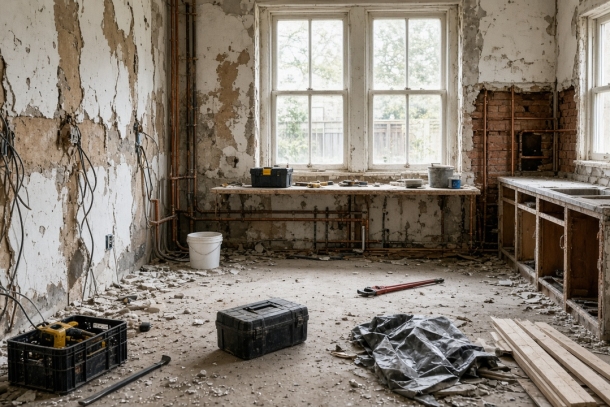
Most renovation budgets don’t fail because of one big disaster. They fail because of a series of avoidable mistakes. Here are seven of the most common, and how to avoid them. These renovation mistakes are avoidable.
1. Starting without a clear scope
If you don’t know exactly what you want, contractors can’t price it accurately. Vague scopes lead to assumptions, extras and disputes. Define the work in writing before getting quotes.
2. Choosing the cheapest quote without comparing properly
A low quote may exclude items others included, or use lower-spec materials. Compare quotes line by line so you’re comparing like with like.
3. No contingency, one of the costliest renovation mistakes
Renovations often uncover hidden problems: old wiring, rotten timber, damp, poor foundations or plumbing issues. Set aside a contingency for the unexpected rather than spending the full budget upfront.
4. Changing your mind during construction
Changes after work starts usually cost more: rework, delays and new materials. Make decisions early, and if you must change something, get the cost and time impact in writing first.
5. Late decisions on finishes
Waiting until the last minute to choose tiles, fittings or appliances can cause delays and rushed, more expensive choices. Finalise selections early.
6. Ignoring approvals and compliance
Skipping municipal approval where it’s required, or using unregistered trades for regulated work, can lead to fines, rework and problems when you sell. Check requirements before starting.
7. Poor payment terms
Paying too much upfront reduces your leverage if things go wrong. Link payments to completed, inspected work and keep a written record.
Why renovation mistakes cost so much
Renovations are harder to price than new builds because you’re working with what’s already there. Walls get opened up, old services are exposed and floors come up. Each surprise needs a decision, and every decision under pressure tends to cost more than one made calmly at the start. That’s why small renovation mistakes add up so quickly.
How to protect your budget before work starts
A few steps make a big difference:
- Write a proper scope. List every room and every item of work, with the finishes you want.
- Get the right advice early. If walls are moving, structure is involved or plans are needed, speak to the right professional before you get quotes.
- Investigate the existing building. Check the condition of the roof, wiring, plumbing and any signs of damp before you finalise the budget.
- Choose finishes early. Select tiles, sanitaryware, kitchen and fittings before work starts, with prices.
- Agree how changes will be handled. Before you sign, agree that every change is priced in writing and approved before it’s done.
Keep a simple budget tracker
You don’t need special software. A spreadsheet with columns for the original amount, approved changes, payments made and what’s still to come is enough. Update it every time you approve a change or make a payment. When you can see the total at a glance, it’s much harder for the budget to drift without you noticing.
Compare quotes properly
When you compare quotes, check:
- Is the same scope included in each one?
- Are the materials and finishes the same specification?
- Which items are provisional sums or allowances, and are they realistic?
- What is excluded, such as rubble removal, plans, certificates or making good?
- What are the payment terms and the expected duration?
The cheapest total often isn’t the cheapest result once exclusions and extras are added.
Living in the house during the work
Many Gauteng homeowners stay in the house while it’s renovated. That can save on rent, but it often slows the work and creates extra costs: protecting floors and furniture, temporary kitchens or bathrooms, extra cleaning and working around the family’s routine. Plan for this honestly rather than assuming it will cost nothing.
Watch for the small extras
It’s not only big changes that hurt the budget. Small additions add up: an extra plug point, a better tap, a slightly bigger window, a change to the tile layout. Each one seems minor, but together they can stretch a budget. Keep a running list and check the total regularly.
When to call in help
If the project is large, involves structural work or you simply don’t have time to manage it, getting someone to manage the project can pay for itself by preventing exactly these mistakes. The key is to get that help early, while decisions are still cheap to change.
A quick budget checklist
Before you commit to a renovation, check that you can say yes to each of these:
- I have a written scope that every contractor priced against
- I’ve compared quotes line by line, including exclusions
- I’ve set aside a contingency and won’t spend it on upgrades
- I’ve chosen my main finishes and know their prices
- I know whether I need plans and approvals, and who is handling them
- My payments are linked to completed work, not dates
- I’ve agreed in writing how changes will be priced and approved
If you can tick all of these, you’ve already avoided most of the mistakes that blow renovation budgets.
Final thought
A renovation budget is protected by planning, clear decisions and good contracts. Avoiding these seven mistakes won’t eliminate every surprise, but it will make your project far more predictable.
Related reading: Renovation Cost in South Africa, How to Plan a Home Renovation in South Africa and JBCC vs a Simple Quote.
Planning a build, renovation or fit-out in Gauteng? Call or WhatsApp me on 082 44 00 421, email unclemerwe@gmail.com or visit my homepage to see how I work.