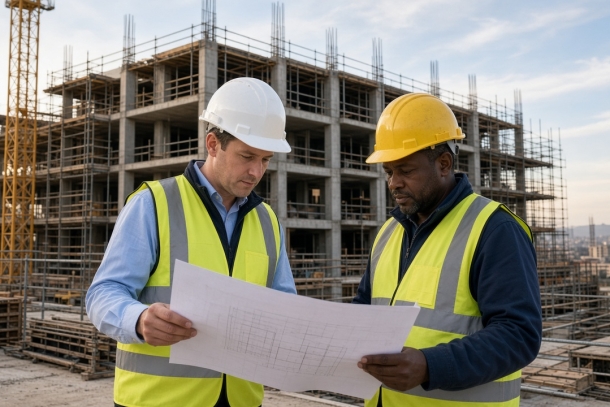
Every construction project has a project manager. Not every project has a good one. I have worked alongside many PMs, and the gap between average and exceptional rarely comes down to who knows the most about concrete or who has the fanciest programme software. It comes down to habits, judgment and how a person carries responsibility when things get difficult. Here is what I see exceptional project managers do differently.
Everything I know about this job comes from hands-on experience on site, so this is not a textbook list. These are the differences I see play out on real projects, week after week.
Exceptional project managers see problems coming
An average construction project manager tells the client the steel is late. An exceptional one knew three weeks ago that the supplier was under pressure, had already spoken to an alternative, and resequenced the work so the delay never touches the critical path.
Looking ahead is a discipline, not a talent. It means walking the site with the programme in your head, asking subcontractors what they are worried about, checking lead times before they become emergencies, and treating every “it should be fine” as a question that still needs an answer. On Gauteng sites, that also means planning for the things we all know happen: power interruptions, summer storms that stop work in the afternoons, and the year-end builders’ break that swallows more time than anyone budgets for.
They own the outcome, not just the task list
Average PMs manage activities. They tick boxes, chair meetings and send minutes. Exceptional PMs own outcomes. They care whether the building actually works for the person paying for it, whether the shop opens on the day the lease says it must, whether the family can move back into their home when they were promised.
Ownership changes how you behave. You stop saying “that’s the contractor’s problem” and start asking “what do I need to do so this gets resolved?” You do not hide behind the contract when a conversation is needed. The contract matters, and I always want proper paperwork in place, but a project run purely on clauses is usually a project in trouble.
They communicate early, clearly and honestly
Bad news does not improve with age. The most damaging thing a project manager can do is sit on a problem hoping it will fix itself before anyone notices. Clients forgive delays and cost changes far more easily when they hear about them early, with options and a recommendation, than when they discover them at the end.
Exceptional PMs also adjust how they communicate to the audience. A homeowner needs plain language and reassurance. A retailer needs dates and consequences for trading. A director needs the bottom line: cost, time, risk and what decision is required. Saying the same thing three different ways is not wasted effort; it is the job.
They protect the client’s money as if it were their own
One of the clearest markers of an exceptional project manager is cost awareness. Not just tracking the budget in a spreadsheet, but questioning every variation, understanding why a rate is what it is, and knowing when a cheaper option is genuinely good value and when it is going to cost more later.
I always tell clients that I sit on their side of the table. That means pushing back on unnecessary extras, insisting that variations are priced and approved in writing before the work is done, and making sure payments follow completed work, not calendar dates. It also means being fair to contractors. A PM who squeezes every subcontractor until they lose money ends up with a site full of people cutting corners.
They lead people, not just programmes
Construction is a people business. The programme does not lay bricks; people do. Exceptional PMs know the names of the foremen, understand what each trade needs to do their best work, and create a site where people raise problems instead of hiding them.
Leadership on site is mostly about consistency. Turn up when you say you will. Make decisions when they are needed rather than letting questions hang for days. Be firm on safety and quality, every time, so nobody has to guess where the line is. Give credit in public and deal with problems in private. None of this is complicated, but doing it every day on every project is what builds a team that wants to work for you again.
They use judgment, not just procedures
Procedures are important. Checklists, inspection sheets and proper documentation catch mistakes that experience alone would miss. But no procedure covers every situation on a building site. Exceptional project managers know when to follow the process to the letter and when the situation calls for a different approach.
That judgment only comes from time on site, from making decisions, seeing the results and learning from the ones that did not go well. It is why I value hands-on experience so highly. You can read about managing a difficult handover, but until you have stood in an unfinished shop two days before opening, with a landlord, a client and five trades all needing answers, you do not really know how you will respond.
They finish properly
Average PMs consider a project done when the contractor leaves. Exceptional PMs know that the last few percent of a job is where reputations are made or lost. Snag lists closed out properly, compliance certificates handed over, operating information collected, the client walked through their new space and left confident in it.
Finishing properly is also about thinking beyond practical completion. Will the finishes hold up? Will the client know who to call if something goes wrong in six months? A building outlives the project, and the way you finish says a lot about the kind of project manager you are.
The difference is a choice
None of the qualities above are reserved for a special kind of person. Looking ahead, owning outcomes, communicating honestly, protecting the client’s money, leading people well, using judgment and finishing properly are all choices you make every day. Average project managers make them occasionally. Exceptional ones make them consistently, especially when it is inconvenient.
That is the standard I hold myself to on every project, whether it is a home renovation, a commercial fit-out or a larger build.
Related reading: Skills Recruiters Look For in Senior Project Managers, Why Technical Skill Alone Won’t Make You a Senior PM and Judgment: A Project Manager’s Most Valuable Skill.
Planning a build, renovation or fit-out in Gauteng? Call or WhatsApp me on 082 44 00 421, email unclemerwe@gmail.com or visit my homepage to see how I work.