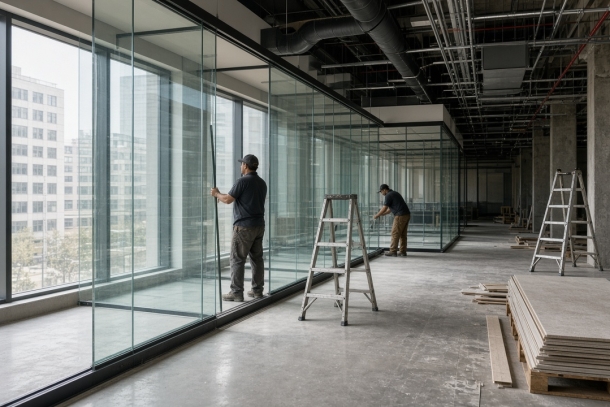
For a business moving into new premises, the opening date matters. Rent may already be running, staff need somewhere to work and customers are waiting. Understanding the phases of a commercial fit-out helps you plan realistically and avoid surprises. Here is a commercial fit-out timeline you can plan around.
Every project is different, so durations vary with size, complexity and approvals. But most fit-outs follow a similar sequence.
Commercial fit-out timeline phase 1: lease and brief
Before design starts, be clear on what the lease allows and requires. Check:
- The landlord’s fit-out guidelines and approval process
- What the landlord provides and what the tenant must do
- Any beneficial occupation period before rent starts
- Building rules for working hours, deliveries and noise
At the same time, define your brief: how many people, which spaces, the look and feel, and your budget.
Where delays hide: unclear lease terms and a vague brief that keeps changing.
Phase 2: Design and pricing
Designers develop layouts, finishes and services. Once the design is developed enough, contractors can price it.
Where delays hide: late design decisions, changes after pricing, and budgets that don’t match the design.
Phase 3: Approvals
Landlords usually need to approve the design before work starts. Depending on the scope, municipal submissions, fire requirements and other approvals may also apply.
Where delays hide: incomplete submissions and slow responses. Start this early.
Phase 4: Procurement
Order long-lead items as early as possible: custom joinery, specialised lighting, imported finishes, air-conditioning equipment, glass partitions and furniture.
Where delays hide: items ordered too late or specified without checking availability.
Phase 5: Construction
Typical work includes partitions, ceilings, electrical and data, air-conditioning, fire services, flooring, joinery and finishes. Trades must be sequenced carefully, especially in occupied buildings with access restrictions.
Where delays hide: poor coordination between trades, unexpected site conditions and late changes.
Phase 6: Testing, snagging and handover
Services are tested and commissioned, compliance certificates are collected and defects are listed and fixed. The landlord may inspect before allowing occupation.
Where delays hide: missing certificates and snag lists left too late.
Phase 7: Move-in and opening
IT setup, furniture, signage, stock and staff move-in. Leave time here. It always takes longer than expected.
Who does what in a fit-out
A lot of fit-out delays come from confusion about responsibilities. Before work starts, be clear on the roles:
- The tenant or client sets the brief, signs off design and pays for the work
- The landlord approves the design and controls access, building rules and base-building services
- The designer or architect develops the layout, finishes and drawings
- Engineers design services such as electrical, air-conditioning and fire where needed
- The contractor or shopfitter builds it, coordinates trades and hands it over
- The project manager keeps everyone moving in the same direction and protects the opening date
When each party knows what they’re responsible for, decisions happen faster and fewer things fall through the cracks.
Working back from the opening date
Most commercial clients start with an opening date and work backwards. That’s sensible, but only if every phase is given realistic time. A common mistake is to squeeze design and approvals, then expect construction to make up the difference. It rarely can.
I prefer to build the commercial fit-out timeline in this order:
- Confirm the fixed dates: lease start, beneficial occupation, rent start and target opening
- List the long-lead items and when they need to be ordered
- Agree how long landlord and other approvals realistically take
- Allow proper time for testing, snagging and handover
- See what time is left for construction, and whether it’s enough
If the numbers don’t work, it’s far better to know that before the lease is signed than three weeks before opening.
Working in a live building
Many fit-outs in Gauteng happen in shopping centres and office parks that stay open while you work. That brings its own challenges:
- Restricted working hours, often with noisy work after hours
- Controlled delivery times and loading bays
- Strict rules on dust, noise and hoarding
- Building management sign-off for hot work, shutdowns and connections to building services
These rules affect the programme directly. Find out about them early and build them in.
Keep decisions moving
A fit-out has a lot of small decisions: finishes, fittings, signage, furniture, IT points. Each one is minor, but together they can stall a project. A simple decision register helps. List each decision, who needs to make it and by when, and review it every week. Late decisions are one of the most common causes of a late opening.
Plan the handover properly
Handover is more than finishing the build. Make sure you have:
- Compliance certificates for electrical, fire and other regulated work
- Operating manuals and warranties for equipment
- As-built information where required
- Landlord inspection and sign-off
- A clear defects list with responsibilities and dates
Leaving this to the last week is how opening dates slip.
A simple fit-out checklist
Before you sign the lease, make sure you have:
- The landlord’s fit-out guidelines in hand
- A clear brief and a realistic budget
- A list of long-lead items and who will order them
- An honest view of how long approvals usually take in that building
- A target opening date with some room built in
[EXAMPLE TIMELINE PLACEHOLDER]
[Steven, if you want to include an example timeline, add realistic durations from your own projects here. Don’t publish made-up figures.]
Final thought
A successful fit-out starts long before the first partition goes up. Clear lease terms, early decisions, timely approvals and early ordering are what protect the opening date.
Related reading: Shopfitting Project Management Checklist and Load Shedding on Site.
Planning a build, renovation or fit-out in Gauteng? Call or WhatsApp me on 082 44 00 421, email unclemerwe@gmail.com or visit my homepage to see how I work.