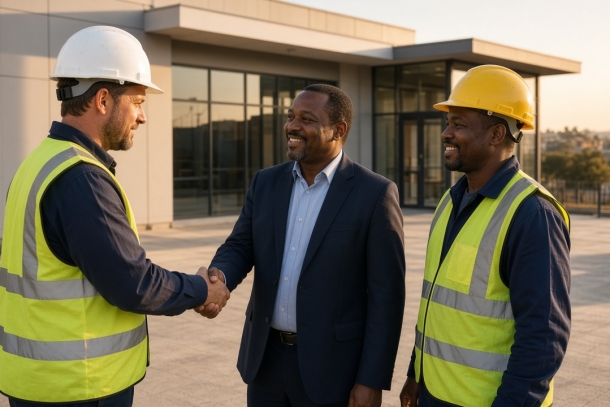
Every construction project runs on documents: drawings, programmes, cost reports, contracts and minutes. They matter, and I would never run a job without them. But underneath all that paperwork, projects actually run on something less visible. They run on trust. Trust in project management is the real currency of every job.
When a client trusts their project manager, decisions get made quickly. When contractors trust the PM, problems get raised early instead of buried. When the team on site trusts the person leading them, they go the extra mile when the programme gets tight. Lose that trust and every conversation becomes a negotiation, every email needs a lawyer’s reading and every small issue turns into a dispute.
In my hands-on experience across construction projects, renovations and commercial fit-outs in Gauteng, trust is the one asset that makes everything else easier. It is a project manager’s real currency.
Trust is earned in small moments
Nobody trusts you because of your job title. Trust builds slowly, through hundreds of small moments where you do what you said you would do.
You arrive at the site meeting on time. You send the minutes the same day. You return the subcontractor’s call when you promised. You check the claim properly and pay what is due, on the date it is due. None of these things are dramatic, but together they tell people something important: this person is reliable.
The opposite is also true. Every missed call, every late payment and every “I’ll come back to you” that never comes back draws down the account. People notice, even if they do not say anything.
Honesty matters most when the news is bad
The real test of trust comes when something goes wrong. A delay, a cost overrun, a design error, a defect that should have been picked up. In those moments a project manager has a choice: soften the message, delay it, or tell it straight.
I have learned that clients can handle bad news. What damages the relationship is finding out late, or feeling that they were managed instead of informed. When I bring a problem to a client, I try to bring three things with it: what happened, what it means for cost and time, and what I recommend we do next. That turns a difficult conversation into a decision, and it shows the client that I am on their side.
Being on the client’s side, and fair to everyone else
A project manager appointed by the client works for the client. That has to be clear. I protect their scope, their budget and their programme, and I push back when something is not in their interest.
But trust on site also depends on fairness to the contractors and trades. If you approve work and then refuse to pay for it, or squeeze every rate until people lose money, you build a team that protects itself instead of the project. A fair PM who is firm on quality and safety, honest about what is required and reliable with payments usually gets better work from the same people.
The best projects I have been part of had a client, a contractor and a PM who all trusted that the others would deal straight. That does not mean everyone agreed on everything. It means disagreements were dealt with openly.
Consistency is what makes trust last
Trust is not built by one big gesture. It is built by being the same person every week. The same standards on safety, whether it is the first day or the last. The same approach to variations, whether the client is relaxed or under pressure. The same tone with the labourer and the director.
When people know where the line is, they stop testing it. When they know you will make a decision rather than leave it hanging, they bring you questions earlier. Consistency removes guesswork, and guesswork is where a lot of site conflict starts.
Why trust in project management speeds everything up
There is a practical side to all of this. Projects with high trust simply move faster. A client who trusts their PM approves a sensible variation in a day instead of a week. A contractor who trusts the PM flags a clash on the drawings before building it wrong. A team that trusts its leader keeps going when the weather or the power supply has put the programme under pressure.
Low trust has a cost too, even if it never appears on a cost report. More meetings. Longer emails. More people copied in to cover themselves. Slower decisions. Over the length of a project, that friction adds up.
How you lose it, and how you rebuild it
Trust can be lost far faster than it is earned. Hiding a problem, blaming others for your own mistake, making promises you know you cannot keep, or saying one thing to the client and another to the contractor will undo months of good work.
Everyone makes mistakes on a building site. When I get something wrong, the best way back is to own it quickly, explain what I am doing to fix it, and then actually fix it. People are usually willing to give trust back to someone who takes responsibility. They are rarely willing to give it to someone who makes excuses.
Trust outlives the project
Buildings get handed over and contracts close out. What remains is how people remember working with you. Clients who trusted you call you for the next project and recommend you to others. Contractors who trusted you want to work with you again and give you their best teams. Recruiters and directors hear about it too, because the construction industry in South Africa is smaller and more connected than it looks.
That is why I think of trust as a project manager’s real currency. It is earned slowly, spent carefully and, when it is looked after, it keeps paying back long after the last snag has been closed.
Related reading: Soft Skills That Define Strong Project Leaders and The Responsibility That Comes with Experience.
Planning a build, renovation or fit-out in Gauteng? Call or WhatsApp me on 082 44 00 421, email unclemerwe@gmail.com or visit my homepage to see how I work.